

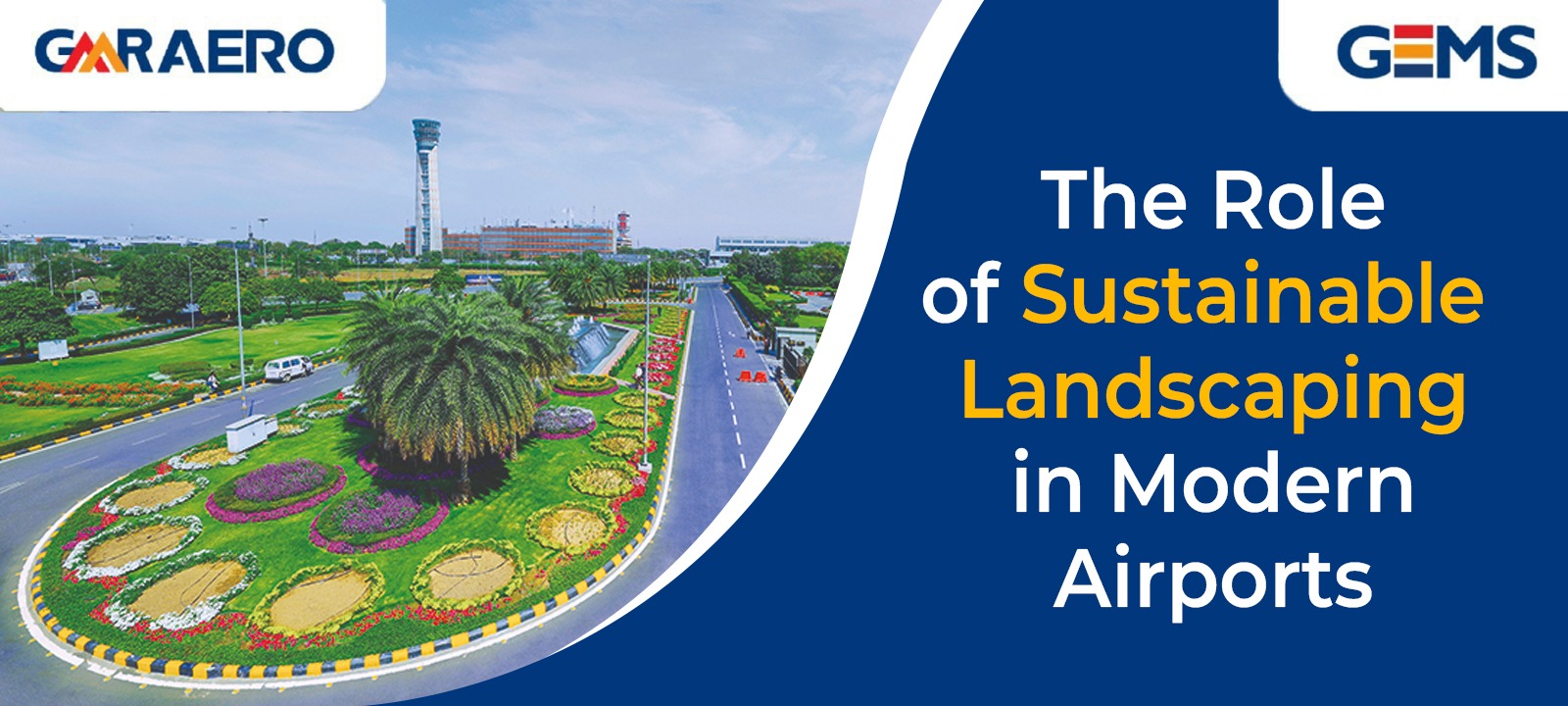
Walk through almost any major airport today and one thing stands out immediately. Greenery is no longer just an aesthetic feature. Native trees, drought-tolerant plants, low-water ground covers and rain gardens have become integral parts of modern airport design.
This is no coincidence. Airports are realizing that the vast areas surrounding terminals, parking facilities and runways can do much more than simply look attractive. Sustainable landscaping has become a strategic tool to support environmental goals, reduce operating costs and create a positive first impression for passengers.
A decade ago, sustainable landscaping often meant decorative shrubs selected mainly for appearance. Today, the approach has evolved significantly. At GEMS, we've seen airports transform landscaping from a maintenance activity into an essential component of environmental stewardship. It now contributes to water conservation, biodiversity enhancement, wildlife management, improved air quality and lower energy consumption.
Airports occupy thousands of acres of land, much of it open space between runways, taxiways, terminal buildings and road networks. Traditionally, these areas were maintained with expansive lawns, ornamental plants and irrigation systems that consumed significant amounts of water.
The result was high maintenance costs and more importantly, landscapes that often attracted birds and wildlife, creating unnecessary operational and aviation safety risks.
Sustainable landscaping changes that approach. Instead of forcing the landscape to fit a particular appearance, airports work with local climate conditions, soil characteristics and native vegetation. The result is green infrastructure that requires less water, lower maintenance, improves biodiversity where appropriate, minimizes wildlife hazards and continues to provide an attractive environment for passengers.
This goes far beyond planting additional trees. Effective airport landscaping generally focuses on five key areas:
Selecting native and drought-tolerant species reduces water consumption, minimizes fertilizer requirements and improves soil stability, particularly around embankments and drainage corridors.
Modern irrigation systems use soil moisture sensors, weather forecasts and recycled water to deliver only the water that is actually required, significantly improving water efficiency.
Rain gardens, bioswales and permeable landscapes naturally filter stormwater, reduce runoff, recharge groundwater and relieve pressure on airport drainage systems.
Airport landscapes must discourage birds and wildlife within operational areas while supporting biodiversity in designated zones. Achieving this balance requires close coordination between environmental specialists and airside safety teams.
Strategically placed vegetation helps reduce surface temperatures around terminals and surrounding infrastructure, lowering cooling requirements and improving passenger comfort.
The benefits extend well beyond environmental performance.
Using drought-tolerant planting and smart irrigation reduces water consumption and maintenance costs. Better landscape planning also minimizes wildlife hazards, reducing operational disruptions and associated costs.
In addition, sustainable landscaping contributes to internationally recognised sustainability frameworks such as ACI Airport Carbon Accreditation and LEED certification by supporting water efficiency, energy conservation, and environmental performance.
Equally important is the passenger experience. Attractive green spaces, shaded walkways and landscaped courtyards create a welcoming environment that enhances the airport's overall image without requiring major infrastructure investment.
Airport landscaping must balance sustainability objectives with stringent aviation safety requirements. Plant selection, vegetation height, irrigation and maintenance practices must all comply with operational regulations.
It also requires specialist expertise that combines horticultural knowledge with an understanding of airport operations, wildlife management and environmental compliance.
Successful airports generally follow a structured approach:
At GEMS, we view landscaping as an integral part of airport infrastructure rather than simply a horticultural activity.
Our teams develop landscape strategies that align with engineering, water management, sustainability objectives and airside safety requirements, ensuring every green space contributes to operational efficiency as well as environmental performance.
The most successful airports recognise that green infrastructure is just as important as roads, utilities and runways. Well-planned landscapes conserve water, reduce heat, support biodiversity and demonstrate a genuine commitment to sustainability.
Sustainable landscaping may not attract the same attention as solar farms or electric vehicles, but its impact is equally significant. Every day it conserves water, manages stormwater, improves biodiversity, reduces operational costs and enhances the passenger experience.
The airports of tomorrow will be defined not only by the technology they deploy, but also by the ecosystems they create. Sustainable landscaping is no longer just about aesthetics, it is strategic infrastructure that conserves resources, strengthens resilience, enhances biodiversity, and creates healthier, more welcoming airport environments.
As airports continue their journey towards Net Zero and sustainable growth, investing in green infrastructure today will deliver environmental, operational and social benefits for years to come. - Roy Sebastian - CEO, GEMS
Whether you're planning a new airport, upgrading existing landscapes, or advancing your sustainability goals, GEMS can help develop practical, airport-specific solutions that balance environmental stewardship with operational excellence.
For airport energy audits, feasibility studies, sustainable landscaping strategies or integrated engineering solutions, please contact:
Rohit Kumar Singh - 📧 Rohitkumar.Singh@gmrgroup.in 📞 +91 97171 99753
Explore more insights on sustainable airport infrastructure at www.gmrgems.com