

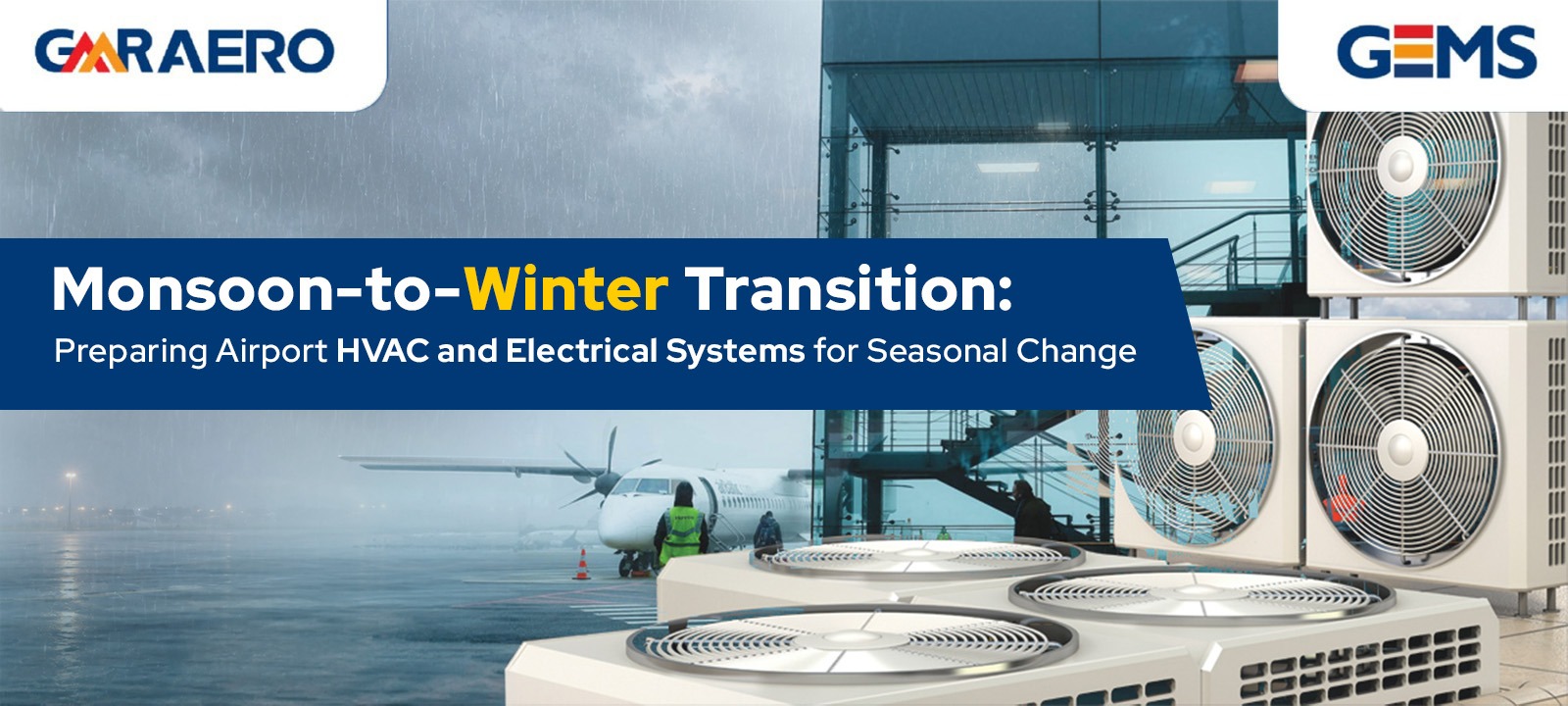
Late September often brings the first subtle signs of seasonal change inside an airport terminal. The monsoon humidity begins to ease, early mornings feel cooler, and passenger traffic starts building toward the busy festive and winter travel period. For passengers, the transition may be barely noticeable. For airport engineering and facility teams, however, it is an important signal to act.
Airports do not have an off-season. Terminals, lounges, baggage systems and airside facilities operate continuously, which means dependable electrical supply and stable HVAC performance remain essential throughout the year. Seasonal transitions can expose hidden weaknesses in both systems, often before a visible failure occurs.
A shopping mall or office building may be able to tolerate a temporary air-conditioning issue or a delayed electrical response. An airport has far less room for disruption. Terminal conditions directly affect passenger comfort, operational continuity and the performance of multiple interconnected systems.
The monsoon also leaves behind stresses that may not become evident immediately. Persistent humidity, condensation, water ingress, contamination and fluctuating loads can gradually reduce equipment efficiency or accelerate deterioration. That makes the monsoon-to-winter transition an ideal window for inspection, servicing and recalibration before peak travel demand intensifies.
Before winter readiness begins, engineering teams need to understand what months of heat, rain and humidity may have left behind. Typical areas of concern include:
These conditions may remain unnoticed for weeks or months, then appear later as unexplained increases in energy consumption, poor indoor conditions or an unplanned equipment shutdown during a high-traffic period.
A well-managed transition is proactive. The objective is not simply to move from cooling to heating, but to rebalance cooling, ventilation, humidity control and airflow for changing ambient conditions and occupancy levels, without disrupting airport operations.
HVAC may show the most visible effects of seasonal change, but electrical infrastructure is equally critical. Airport electrical systems operate under demanding conditions, high humidity, temperature variation, heavy and variable loads and the requirement for uninterrupted operation around the clock. The seasonal transition is therefore an important opportunity to verify electrical health through measures such as:
The purpose is straightforward: identify developing faults early, confirm backup capability and ensure that the electrical network is prepared for higher seasonal demand without compromising reliability.
There is a simple truth in airport facilities management: prevention is almost always less disruptive and less costly than recovery. A blocked drain pan found during a planned October inspection may be a routine maintenance task. If left unnoticed until December, the same issue could lead to water damage, equipment shutdown and passenger-area disruption during one of the busiest travel periods of the year.
Seasonal preparation is rarely visible to passengers. It is carried out behind the scenes by engineering, operations and maintenance teams who inspect, test, clean, calibrate and document systems before a problem emerges. That discipline is what allows an airport to move smoothly from one season to the next.
Passengers place considerable trust in airports to provide a safe, comfortable and reliable journey at every touchpoint. That reliability is not accidental. It is the result of meticulous preparation, especially during seasonal transitions when HVAC and electrical systems must adapt to changing environmental and operational demands.
A proactive, well-documented maintenance regime helps airports stay ahead of the curve, improving system resilience, controlling energy use and reducing the risk of disruption during peak travel months.
“Seasonal transition is a point at which the engineering discipline of an airport is truly tested. It is not about responding to a change in weather; it is about anticipating its impact on every HVAC unit, electrical panel and backup system well before passengers ever feel the difference. Getting the monsoon-to-winter shift right is what allows an airport to remain comfortable, efficient and uninterrupted through its busiest travel months.”
- Roy Sebastian, CEO, GEMS
HVAC and electrical systems are most successful when passengers hardly notice them. Their value lies in dependable performance, maintaining comfort, air quality, power continuity and operational resilience as seasonal demands change.
As passenger traffic grows, airport operations become more digitized and energy requirements increase, proactive maintenance will become even more important. Condition-based inspections, calibrated HVAC performance, robust electrical infrastructure, BMS analytics and predictive maintenance can help modern airports identify risks earlier and manage seasonal change with greater precision.
The comfort passengers experience in December is often the result of the diligence of airport engineering teams in October.
For integrated Airport Engineering Services, HVAC Maintenance, Electrical Systems Management and Infrastructure Advisory, please contact: Rohitkumar.Singh@gmrgroup.in | +91 97171 99753