

Enhancing Security, Efficiency and Passenger Experience
When passengers travel through an airport, their focus is naturally on reaching their destination safely and on time. Few stop to consider the remarkable journey their baggage undertakes behind the scenes. Yet every suitcase that arrives at the correct destination is the result of a highly sophisticated network of technology, automation, security systems and operational coordination.
Modern airports rely on advanced Baggage Handling Systems (BHS) and integrated screening technologies to ensure that baggage moves efficiently, securely and accurately throughout the passenger journey. As airports continue to evolve into smart mobility hubs, baggage operations are becoming increasingly intelligent, connected and passenger-centric.
At GEMS, we are committed to delivering world-class airport infrastructure and operational excellence. Through innovative baggage handling and screening solutions, we aim to provide passengers with a seamless travel experience while maintaining the highest standards of safety and efficiency.
A Baggage Handling System is the backbone of airport baggage operations. It comprises an integrated network of conveyors, sorters, scanners, tracking devices and control systems that transport baggage from check-in to aircraft loading and ultimately back to passengers upon arrival.
Operating continuously around the clock, the BHS functions as an intelligent logistics network, ensuring that every piece of baggage reaches its intended destination accurately and efficiently.
Key functions of a modern Baggage Handling System include:
Today's advanced systems are capable of processing thousands of bags per hour while maintaining exceptional levels of accuracy and reliability.
Airport security begins long before passengers board an aircraft. Every checked bag undergoes multiple layers of security screening designed to detect potential threats while minimizing disruption to passenger flow.
Modern airports increasingly utilize Inline Baggage Screening Systems, where security screening equipment is integrated directly into the baggage handling process.
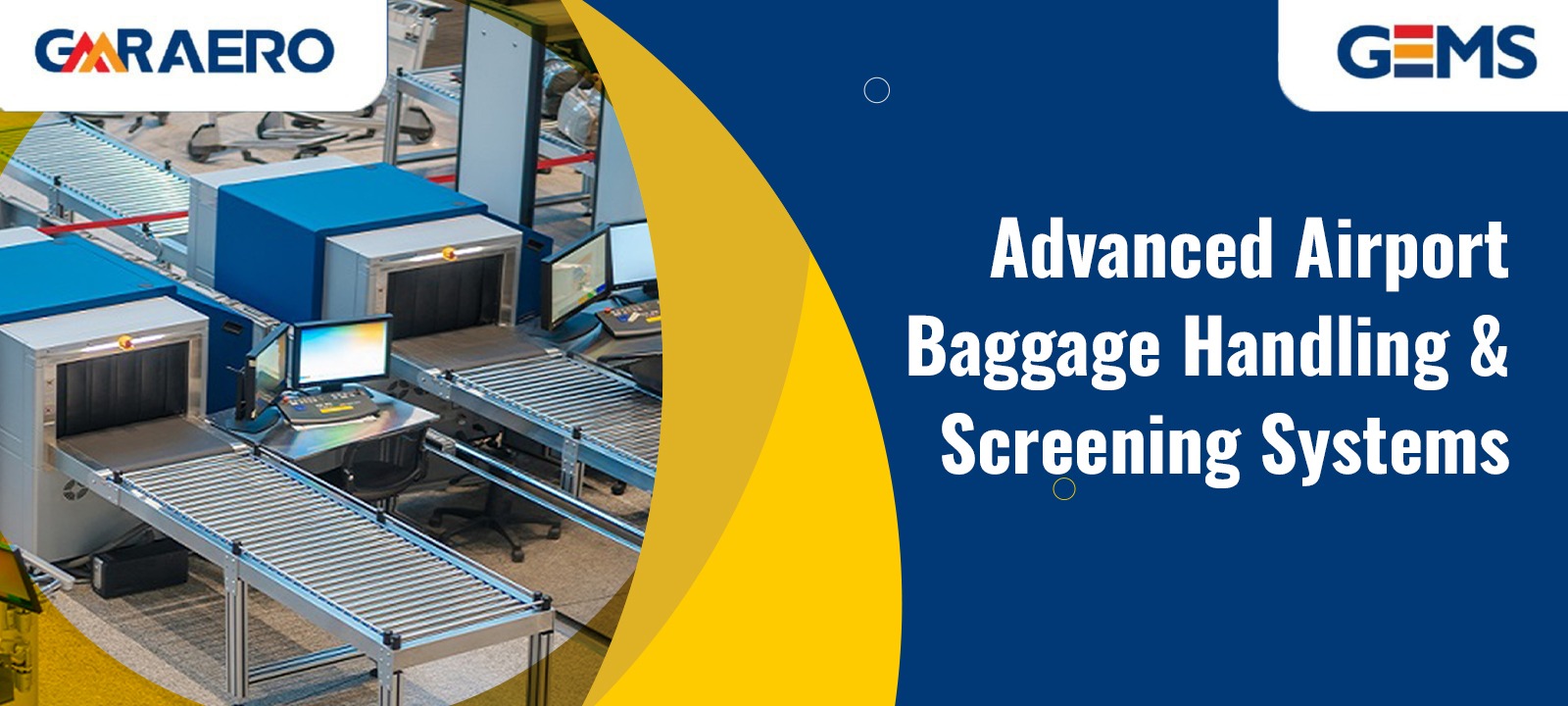
As baggage moves through the conveyor network, it passes through advanced Computed Tomography (CT) and X-ray scanners capable of generating detailed three-dimensional images of bag contents. This technology provides superior detection capabilities compared to traditional two-dimensional screening methods while reducing false alarms and manual inspections.
The result is enhanced security combined with faster processing times and improved operational efficiency.
Most international airports employ a layered screening approach that includes:
Level 1: Automated CT or X-ray screening of all baggage
Level 2: Advanced automated analysis of flagged items
Level 3: Security officer review and assessment
Level 4: Explosive Trace Detection (ETD) and secondary inspection when required
This multi-layered framework ensures comprehensive threat detection while maintaining smooth baggage flow through the airport.
Explosive Detection Systems represent one of the most critical components of airport security infrastructure. These systems utilize advanced imaging technologies and sophisticated threat-recognition algorithms to identify potential security risks with exceptional accuracy.
By automating much of the screening process, EDS solutions reduce the need for manual intervention while enabling security personnel to focus attention only on baggage that requires further inspection. This approach strengthens security, improves efficiency and supports a safer travel environment for passengers and airport staff alike.
One of the most significant advancements in baggage management has been the adoption of Radio Frequency Identification (RFID) technology.
Traditional barcode systems require direct line-of-sight scanning and can occasionally fail if baggage tags are damaged or improperly positioned. RFID technology overcomes these limitations by enabling baggage tags to be read automatically from multiple angles without direct visibility.
The benefits are substantial:
Through RFID-enabled systems, passengers gain greater confidence and transparency regarding the status and location of their baggage throughout their journey.
Passenger expectations continue to evolve, driving airports to adopt technologies that deliver greater convenience and control.
Self-Bag Drop (SBD) kiosks have become an increasingly common feature of modern airports. These systems allow passengers to independently check their baggage, significantly reducing waiting times and improving terminal efficiency.
The process is simple:
1. Scan the boarding pass.
2. Print and attach the baggage tag.
3. Place the baggage on the conveyor.
Within minutes, the baggage enters the airport's automated handling system and begins its journey toward the aircraft.
Passengers often arrive at airports several hours before departure. Advanced Early Bag Storage systems provide automated storage solutions that securely hold baggage until it is required for aircraft loading.
These systems optimize terminal space utilization, improve operational flexibility and ensure baggage is available precisely when needed.
Some of the world's most advanced airports are already deploying robotic technologies to assist with baggage handling activities. Intelligent robotic systems can lift, sort and transfer baggage with minimal human intervention, improving consistency, reducing manual workload and enhancing operational efficiency.
Modern baggage handling systems generate vast amounts of operational data. Artificial Intelligence (AI) and advanced analytics transform this data into actionable insights that improve airport performance.
AI-enabled systems can:
By combining automation, analytics and real-time monitoring, airports can achieve greater operational resilience while improving passenger satisfaction.
At GEMS, integrated monitoring platforms provide operators with complete visibility across the baggage handling ecosystem, enabling proactive decision-making and efficient system management.
Sustainability has become a strategic priority for airports worldwide and baggage handling systems play an important role in supporting environmental objectives.
Modern systems incorporate numerous sustainable features, including:
These innovations contribute to lower energy consumption, reduced carbon emissions and more sustainable airport operations.
Behind every successful baggage journey lies a simple objective: providing passengers with a seamless and stress-free travel experience.
Passengers expect their baggage to arrive safely, promptly and at the correct destination. Advanced baggage handling and screening systems make this possible by combining security, automation and operational excellence.
Through continuous investment in technology and innovation, GEMS is committed to delivering:
The most successful airport systems are often the least visible to passengers. When technology works flawlessly, travelers simply enjoy a smooth and effortless journey.
The next generation of airport baggage systems will be even more intelligent, connected and autonomous.
Emerging innovations include:
Facial recognition and biometric technologies are expected to further streamline baggage check-in processes, reducing touchpoints and enhancing passenger convenience.
Future systems may link baggage directly to passenger movement throughout the airport journey, improving security and reducing the risk of unaccompanied baggage.
Advances in robotics and automation will continue to reduce manual intervention across loading, sorting, transportation and delivery processes.
Blockchain technologies have the potential to create secure and transparent digital records of baggage movements, enhancing traceability and accountability across the entire travel ecosystem.
As aviation continues to evolve, baggage handling and screening systems will remain a critical component of airport operations. The convergence of automation, artificial intelligence, advanced security technologies and sustainable design is reshaping how airports manage one of their most essential functions.
At GEMS, we believe that the airports of the future will be defined not only by their physical infrastructure but also by the intelligence that powers them. Through innovation, operational excellence and a commitment to passenger satisfaction, we are helping build airport environments that are safer, smarter and more efficient than ever before.
"The airports of tomorrow will be defined not only by their infrastructure, but by the intelligence that powers them. Data-driven operations, advanced automation and passenger trust will form the foundation of the next generation of airport excellence."
— Roy Sebastian, CEO, GEMS
For integrated airport feasibility studies combining engineering, financial modelling and operational simulation, please contact: Rohitkumar.Singh@gmrgroup.in | +91 97171 99753